Assalamu’alaikum warahmatullahi wabarakatuh,
Welcome. And thank you for showing up. If you’re here, you’re likely not just here for business. You’re here because you believe — like we do — that this Ummah is meant for more.
That we were not created to be spectators in history. We were created to shape it.
The World is Shifting. And So Must We.
Across the globe, tectonic plates are moving.
The world order that centered on the United States and Western Europe is no longer what it once was. As Ray Dalio has chronicled, empires rise and fall — and today, the signs are clear: the West is in decline. Social fragmentation. Unsustainable debt. Waning global influence.
And perhaps most tellingly, the moral authority that once gave the West its soft power has crumbled beyond repair. The United States — once seen as the global beacon of human rights — has lost its moral ground with no return, as it enables and defends the ongoing genocide in Gaza. In the eyes of millions, its complicity has shattered any remaining claim to global moral leadership.
And rising on the horizon are two civilizations: the Chinese, with their strategic coherence and long-term vision — and the Muslim world, young, resource-rich, and awakening from centuries of fragmentation.
But here’s the truth: one of them is moving with unity and clarity.
The other — ours — is still asleep.
We are 2 billion strong, but still divided.
Divided by borders. By currencies. By conflicts not of our own making. And while we debate, Masjid Al Aqsha remains under occupation. Baitul Maqdis remains captive.
This isn’t just about Palestine. This is about all of us. Because the liberation of Al Aqsha and Baitul Maqdis isn’t just a cause. It’s a compass — a test of whether we can move as one Ummah again.
Awakening the Ummah Requires More Than Hope. It Requires Us.
And not just imams or intellectuals.
It requires entrepreneurs. Professionals. Builders. Doers. People like you.
Because this Ummah was never awakened by slogans.
It was awakened by trade.
By men and women who carried the message of Islam in their their conduct and their commerce.
Long before global brands or multinational banks, we had something better — trust.
The Prophet Muhammad ﷺ was not a general when he began his mission. He was a merchant.
Known as Al-Amin — the trustworthy. He dealt in goods, but delivered values. Beside him stood Sayyidah Khadijah RA — a woman of vision, wealth, and courage. The first investor in Islam.
Together, they didn’t just do business.
They sparked a civilization.
And for centuries, others followed:
- Karimi merchants of Egypt, who financed trade and da’wah from Yemen to India
- Hadrami traders of Southeast Asia, whose ethics brought Islam to the Indonesian archipelago
- Mappila Muslim seafarers of Malabar, who bridged India and Arabia through commerce and character
- Tijani caravans of West Africa, who spread Islam through Sahara routes, not sabers
- The Ahi brotherhoods of Anatolia, fusing entrepreneurship with spiritual brotherhood
- Serikat Dagang Islam of the Nusantara, where trade became a form of resistance to colonial rule
They built masjids. They funded schools. They launched waqf networks that supported generations.
They didn’t separate faith from finance. They built both dunya and akhirah — with one intention.
So What Happened to Us?
Today, we have more Muslim entrepreneurs than ever.
But we are scattered. Isolated in cities and sectors. Speaking different languages. Solving the same problems — alone.
We succeed on spreadsheets.
But we fall short on synergy.
And while we celebrate individual exits, our Ummah remains in exile — from its potential.
That’s Why We Built Ummah.
A global movement of Muslim founders and professionals — from Jakarta to Istanbul, Abuja to Karachi, London to Kuala Lumpur.
Rooted in faith. Driven by strategy. Inspired by history. Committed to justice.
We believe:
- Masjid Al-Aqsha is our mirror. It reflects our disunity — or our readiness to rise.
- United entrepreneurs and professionals are the engine of the Ummah. When connected, we strengthen the Ummah as one living body.
- Business can be ibadah. Profit, when guided by purpose, becomes provision for the people.
- Masjids must empower. Not just places of prayer, but hubs of opportunity.
- Unity is a choice. And the time to choose is now.
So Join Us.
Because here, you’re not alone.
You’ll find a global brotherhood and sisterhood — of Muslim founders, professionals, and believers — who don’t just dream, but do.
In Ummah, we move together.
We build ventures that are halal and high-growth.
We launch initiatives that echo across boardrooms and backstreets, from San Francisco to Surabaya.
We pursue jihad with excellence — not by the sword, but by the pen, the pitch deck, and the product roadmap.
Together, we don’t just build businesses — we push boundaries. Through Ummah, we rally voices to urge our governments to open the gates for free movement of people, products, and capital across the Muslim world. A united economy is not a fantasy — it is a testament of our will to stand together, to trade together, and to thrive together. Because unity isn’t just spiritual — it must also be structural.
This is what it means to be part of Ummah.
- We don’t compete to dominate. We collaborate to uplift.
- We don’t just give zakat. We build systems that produce more givers.
- We don’t wait for saviors. We become the generation we’ve been waiting for.
Because the path to liberation — of minds, markets, and Masjid Al Aqsha — doesn’t begin with anger.
It begins with alignment.
If you believe that:
- Faith should power your future, not pull you back
- Business can be sacred, and still scale
- The Ummah’s awakening is waiting on us — not someone else
Then this is where you belong.
Welcome to Ummah.
Let’s build what comes next — together.
SERVANTS OF UMMAH
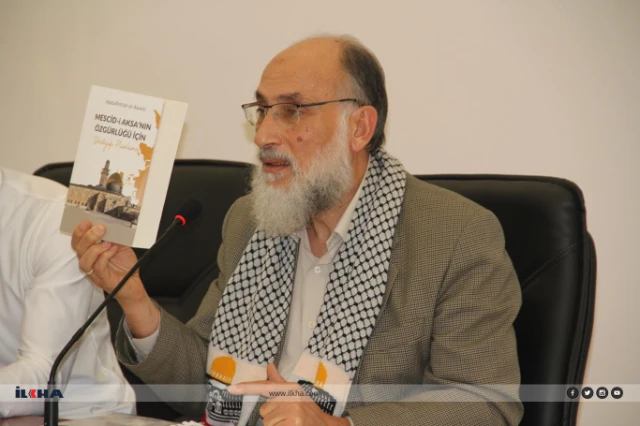
Board of Advisor: Prof Abd Al Fattah El-Awaisi
Prof. Dr. Abd al-Fattah El-Awaisi is a distinguished British Palestinian scholar of International Relations and the pioneering founder of Islamicjerusalem (Bayt Al-Maqdis) Studies. A native Maqdisi and global thought leader, he earned his PhD from the University of Exeter (UK) in 1986 and has since dedicated nearly four decades to research and education across the UK, Türkiye, Malaysia, and Indonesia. He currently serves as Professor of International Relations at Mardin Artuklu University (Türkiye), University of Malaya (Malaysia), and University of Muhammadiyah Jakarta (Indonesia) — while being based in Edinburgh, United Kingdom.
Prof. El-Awaisi is widely recognized for his groundbreaking theories, including the Barakah Circle Theory and the Aman Theory of peaceful coexistence. He has published 79 major works in English and Arabic, many of which have been translated into French, Malay, Turkish, Persian, Indonesian, and Bengali. As the founder and Editor-in-Chief of the Journal of Islamicjerusalem Studies and Chair of its annual international conference since 1997, he has shaped a new generation of Muslim scholars committed to justice, unity, and the liberation of Bayt Al-Maqdis. He is also a Fellow of the Royal Historical Society – UK, a rare honor reflecting his lifetime contribution to global scholarship.
In recognition of his enduring impact, Prof. El-Awaisi has received numerous international awards, including the Stirling Council Provost’s Civic Award (1999, UK), Special Award for Innovation (2007, UK), Islamic World Istanbul “Science” Award (2018, Türkiye), Custodian of Al-Quds Award (2021, Türkiye), and the International Courage Award – Field of Academia (2025). As a visionary, educator, and tireless advocate for Bayt Al-Maqdis, he brings unmatched depth and leadership to Ummah’s Board of Advisors — guiding our mission to unite and elevate the Muslim world through knowledge, integrity, and strategic action.
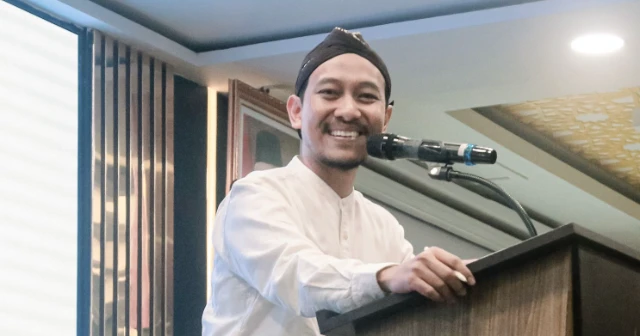
Servant:
Ghufron Mustaqim
Ghufron Mustaqim is a seasoned tech entrepreneur with over a decade of experience building and leading venture-backed startups serving the Southeast Asia market, with a cumulative USD 139 million in capital raised. He was the Co-founder & CEO of Evermos, Vice President at Sale Stock, and a Consultant at McKinsey & Company. Recognized as an Endeavor Entrepreneur, Ghufron is part of a global network of high-impact founders shaping the future of emerging markets. He is currently based in Indonesia.
He also serves as the Co-founder and Secretary General of Serikat Usaha Muhammadiyah (SUMU), the entrepreneurial arm of Muhammadiyah — the world’s largest Muslim organization. Under his leadership, SUMU has grown into a vibrant ecosystem of over 100,000 members, merchants, and users, focused on scaling grassroots businesses through access to capital, markets, and strategic support.
Building on this momentum, Ghufron now leads the development of Ummah — a global movement to unite Muslim entrepreneurs and professionals, fostering cross-border collaboration and economic empowerment. His vision is rooted in a belief that the unity of the Ummah begins with strong, connected builders — and that together, we can shape a more just, peaceful, and prosperous world.